
Sequentialism and Regret
Three alternative approaches to the fear of sunk costs in academic planning

In my role working in undergraduate advising, I often have similar conversations. Many students who I talk to are concerned about their credits. They want to know how many they’ve earned from high school. They want to know what’s remaining in their majors, minors, or certificates. And they want to be sure that they’re not taking any credits that are going to be “wasted.”
While every student is required to complete 120 credits to earn a bachelor’s degree at the university, that number is not the biggest concern for most students. Between credits that many students bring in with them and the requirements of pursuing a degree, that threshold often gets met without specifically planning for it.
The fear students hold is that they might accidentally sign up for a course that merely contributes to this goal of meeting a credit threshold but does not contribute to any nested outcomes. The credit would be unproductive if it doesn’t help them toward another certification, something else they can put on a resume.
I’ve been thinking about this as a fear of inefficiency, a fear of taking a detour and coming to regret not moving in a straight line. While the fear is not universal, it’s common. Why? Where else does this fear show up? And what can colleges do about it?

Finishing Strong
It’s not unreasonable for students to fear wasting their time. Time is, and I don’t know if you’ve heard this before or not, money. Since every semester can mean thousands or tens of thousands more dollars of expense, it is important for students to make sure they graduate on time.
That being said, graduating early is not the only priority at play. It’s common for students who are eligible to graduate in less than four years to delay doing so. This happens in high schools and colleges for much the same reason: they planned on being there for four years and graduating early would mean missing out on the “full experience.”
This is probably more likely for students who are not facing intense financial pressure from an extra semester or two in college. But even these students will tend to avoid taking many classes that don’t contribute to a credential. If they are going to stay for another semester anyway, they are likely to try to add a minor or a certificate or something to justify the choice.
Perhaps this is a fear of being perceived as frivolous. Even if the primary motivation is something social like “finishing senior year with my friends,” it is easier to couch the decision in more practical terms. This helps sell the decision to the stakeholders in their lives like parents, friends, and teachers.
These are some possible explanations for “non-wasteful” course selection at the end of an academic program. But what does this look like at the beginning of one?
Starting Confident
When college students begin their undergraduate study, they are typically expected to enter with a plan. For example, at Indiana University about 95% of entering freshmen declare a major before they’ve taken their first college class.
They are encouraged to do this. Competitive majors will often restrict the ability of students to switch into them. But more than that, there’s a social pressure to have a pathway.
When students arrive at college campuses, one of the first and most frequent questions they will be asked is “What’s your major?” It takes real courage to say “I don’t know yet.” It’s much easier to say “Psychology” or whatever, even if you’re not really sure what that means. At least you’ll sound confident.
But by committing so early to an academic track, exploring alternatives becomes more difficult. For one, most classes are semester-long. So, even exploring new subjects means committing to four months of a new class in an unknown field. If you add the social pressure of having to explain why you’re taking a class that doesn’t “count for anything,” it’s not hard to see why students are prone to just sticking with their first plan, even if it’s not something they’re totally comfortable with.
Of course, students change their majors all the time. But the structure of the typical university disincentivizes them from doing so. The pressures of money, time, and social performance pressure students to commit early and commit hard to a pathway. Divergence from that pathway becomes a minor crisis involving administrators, advisors, and the threat of an over-extended undergraduate career.
This is just my personal characterization of the phenomenon as I observe it. This fear of academic exploration and its apparent risks constrain student pathways. But if this is at least partly a structural issue based in university curriculum design, are there structural alternatives that could mitigate some of these pressures?
Talk the Block
One hurdle to experimenting with a course of study is the sheer duration of a semester. Signing up for something you might be interested is a tough sell when you’ll be stuck in the class from Labor Day to Christmas.
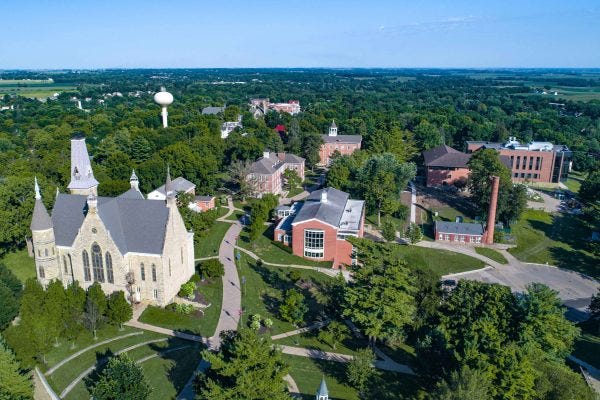
One way to encourage more flexible planning is through a “block” schedule. I previously wrote about the quarter system which divides the academic year into ten-week terms.
A block schedule is just an extension of that concept. Instead of completing a term every ten weeks, you complete one every 4 weeks. Depending on the program, you will take no more than two classes over the course of that compact term, but you’ll meet at least four days per week. One way or another, you have just as much “seat time” as a semester-long course, but it’s done within a month.
This approach is not common. With slight variation between them, Cornell College (in Iowa), Colorado College, and Lynn University run their undergraduate programs on a block schedule. I’m not sure if there are any more than that. The approach is sufficiently uncommon that IPEDS doesn’t have an available category for it; all three institutions are listed as operating on a “semester” calendar, which is somewhat misleading.
None of these colleges throw majors out the window. Most students will still feel some pressures to align their academic planning to definite outcomes from an early point. The advantage, though, is that you can take a wider range of courses before you have to make “commitments.” It’s much easier to shift your long-term plans from month to month instead of locking yourself in for at least a semester at a time. Each intervening month allows students to take a new class and reflect on their options instead of only being able to do so twice per year when they register for the subsequent semester.
The block is not perfect. Some students may find that trying to learn calculus in a month is too condensed and overwhelming, even if it’s the only class they’re taking. And if you miss a few days of class, you’ve missed much more on a block than in a regular semester.
But if you want students to think more flexibly about the academic plans, this is one approach you can take.
Just One Thing
I won’t belabor this, but once again, a great books program, like I’ve written about previously, would be one answer to this issue.
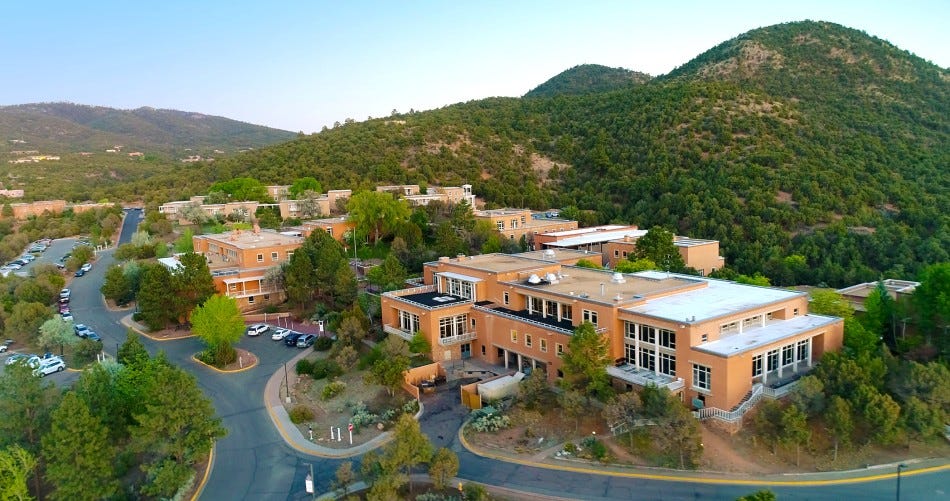
Instead of students struggling to commit to a single academic discipline early, they would commit to a college. A place like St. John’s College only has a degree in liberal arts, and there are very few elective courses. The focus is on breadth and breadth is not optional. So, if students can accept that as a reasonable priority, they can explore their interests within a bounded curriculum. They will still experiment academically with things like summer courses, study abroad, and internships.
Another side of this coin would be picking a specialized college. If you go somewhere like Sterling College, the only degree you can get is in environmental studies. You have freedom to select a range of courses, but all of them will serve a disciplinarily limited outcome. You might also point to a place like Webb Institute where every student studies naval architecture. There are scads of other specialized schools along these lines.
But perhaps all of these institutions simply accelerate the timeline for self-constraint. By limiting choice while students are enrolled, the one big decision they have to make is whether to enroll in the first place. This isn’t so different from asking students to pick a major before starting college.
But if there is a difference, it’s that once the choice is made, it eliminates some amount of decision fatigue. Instead of always knowing that you could change your major but not knowing whether you should, you are just enrolled in the college. Obviously students can and do drop out of specialized colleges, but the lower-stakes, recurring decision fatigue of trying to pick the “perfect” track from a list of hundreds of options is helpfully absent.

Renewing the Contract
So, there are a few alternatives to the mainstream university’s approach to course planning pressures. You can modify the calendar. You can constrain the options.
Or you can redefine the degree.
College of the Atlantic is a progressive institution (by both original and contemporary definitions). As such, they emphasize the role of the individual student in defining their educational outcomes.
Instead of having academic majors, every student graduates with a degree in “human ecology.” This is similar to a “liberal arts” degree in that it can contain a wide breadth of studies, but the difference is there is less breadth required.
While the college has some basic general education requirements, most of the degree is up to each individual student. Unlike a great books college, CoA offers many courses that would be offered in traditional, disciplinarily-aligned departments. The topics can be highly specialized in subjects like marine science, art, philosophy, social science, and plenty of other things.
But the only person who has final say about how to satisfy their degree requirements is the student. Through regular review with a faculty advisor, students at CoA will create academic plans to pursue their interests and goals.
This is a “contract,” but the plan is not unalterable. Most universities declare what courses you need to do to satisfy a degree. The alternative at CoA is to have that process be something students work through iteratively as they proceed.
If you are invested in your education, there are no dead ends and no side roads. It’s all useful. This little college in Maine is not the only place you can approach a bachelor’s degree this way, but it’s one of the few.
Now, this can, in effect, still result in students specializing in some discipline. They may start college to study biology and then just do that. But the knowledge that they can shift their priorities without having to double back or “waste time” can lift a cognitive burden, even if their academic trajectory appears the same externally as it would appear at a mainstream university.
Open Pathways
Are block plans or specialized programs or progressive colleges superior to the traditional university? I don’t think so. For many students the different constraints of these alternative programs would be more stressful than the limitations of a research university.
But if students feeling forced to pick one academic track among many (and facing the psychic pressure to justify that decision) is a concern, these institutions demonstrate that their are alternatives. Because American higher education is so decentralized, alternative institutions like these can thrive if students are willing to take a chance on something new.
How do you think you’d experience college differently if the pressures to pick an academic lane were structured differently?
-Matt
My second-born, who is at SJC, is seriously thinking of transferring because of the breadth of her education and her desire to focus on specifically preparing for public policy. I am admittedly disappointed that she is ready to narrow her learning and wants to leave such a beautiful institution of true learning and inquiry. How would you advise her?
Would an institution, either large or small, enhance their appeal and serve students by a) accepting that an 18 year old often doesn't know what he/she wants and then b) offers a clear path to let said student learn that? For example, a declared major in "science" but not chemistry or biology or geology? Allowing an student to specialize, without backtracking two years in? Certainty allowing for uncertainty? Recognizing reality for many?