
The joy of learning
Building a class based on a cliche

This past semester, I had an opportunity. I was asked to be adjunct faculty for two sections of a first-year seminar at the IU Honors College. My regular assistantship is also at the Honors College, so this wasn’t as random as it may sound.
The course was a the second part of a two-part introductory seminar. It’s designed to introduce new college students to skills that will help them succeed over four years. The first class is more philosophical and oriented around the purpose of higher education and how students fit into it.
The second half, which I taught, focuses on the skills to succeed as an independent learner.
These classes were only taught for the first time two years ago, so I had a lot of flexibility in designing the course. I’d like to share a bit about how I went about it.
Means as Ends
From the jump, I decided that I needed to orient the course around process goals, rather than conceptual mastery. My focus was:
1) Students learn skills and resource use at IU to make them better at research
2) They have fun doing it
That’s it. Everything I did had to at least attempt to meet each goal.
Now, I can’t meet even those two goals perfectly. There are things I’d ask students to do that some of them may have done before. Some of my activities will be exciting to some students and wastes of time to others. The same goes for “fun.” I can’t promise that everyone has fun.
But one way that I tried to make it more likely that students would have fun is by allowing them to choose what they researched. Instead of me assigning them a topic of inquiry, it was up to them.
Now, some topics don’t lend themselves to academic research as well as others. So we did some brainstorming and conversations about their topics just to get them off to a good start. But after a couple weeks, they were off to the races.
Some students chose to study something related to their major, but most chose a topic that was a personal interest, often something that they did not have space to learn about in their normal coursework. The idea was that by having ownership over their learning outcomes, students would be more invested in the process and see how the skills and resources we used in class could help them learn things they really cared about.
Skills
Inquiry is not one thing. It’s a set of habits and capacities that make it possible to learn new things in diverse ways. So one of my objectives was teaching them great skills.
This is, however, a class that meets for 75 minutes once per week for 1.5 credits (normal courses are 3). So there are limits to how much I can cram in, as well as how much is reasonable to demand of students who have other courses with heavier obligations.
So I decided to start at the start. I wanted to work through some of the core capacities that I use in my own research and perhaps challenge them to get down to the basics.
We learned how to search for books on the library’s website. Then we learned how to find them in the stacks, as well as how to find related texts via physical inspection on a field trip to the library. We learned how to search for and download journal articles. We learned how to use reference sections to find old sources. And we learned how to use tools like Web of Science to find which sources cite texts that students have already used.
None of these are mysterious. All of my students could have figured out how to do all these things themselves.
But sometimes, you don’t know what you don’t know. So if nobody has asked you to scan shelves in the stacks and find related resources, it might not cross your mind.
Now that they’ve done it, though, they can’t not know that they have done it. Unlike many conceptual outcomes in coursework, this isn’t about depositing an idea in a student’s brain. This is letting them known that they are capable of something new, and knowledge of their own capacity for inquiry is much harder to forget.
Resources
Another goal of the course was to connect students to more resources around campus.
So, alongside their continued note taking on sources they found for their project, students needed to do some extracurricular activities.
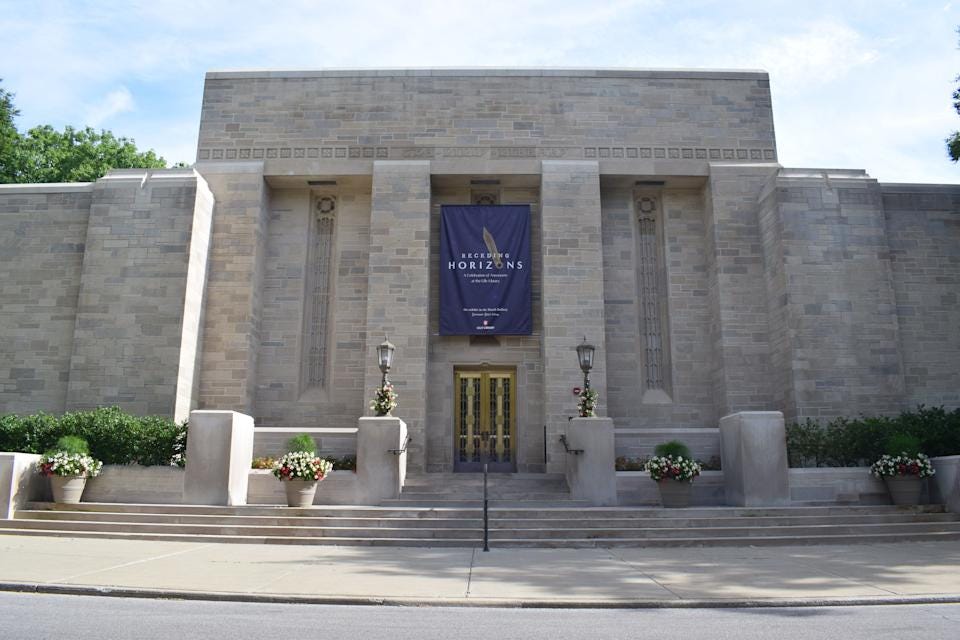
This meant doing things like visiting a reference desk at one of the libraries. And getting their writing looked at by the writing center. And, pictured above, requesting materials and visiting an archive on campus.
I didn’t do things like this just as an act of whimsy. I wanted students to see that there were people on campus who were there to support their learning journey. And I hoped they would see that they could find different kinds of materials by searching in unexpected places.
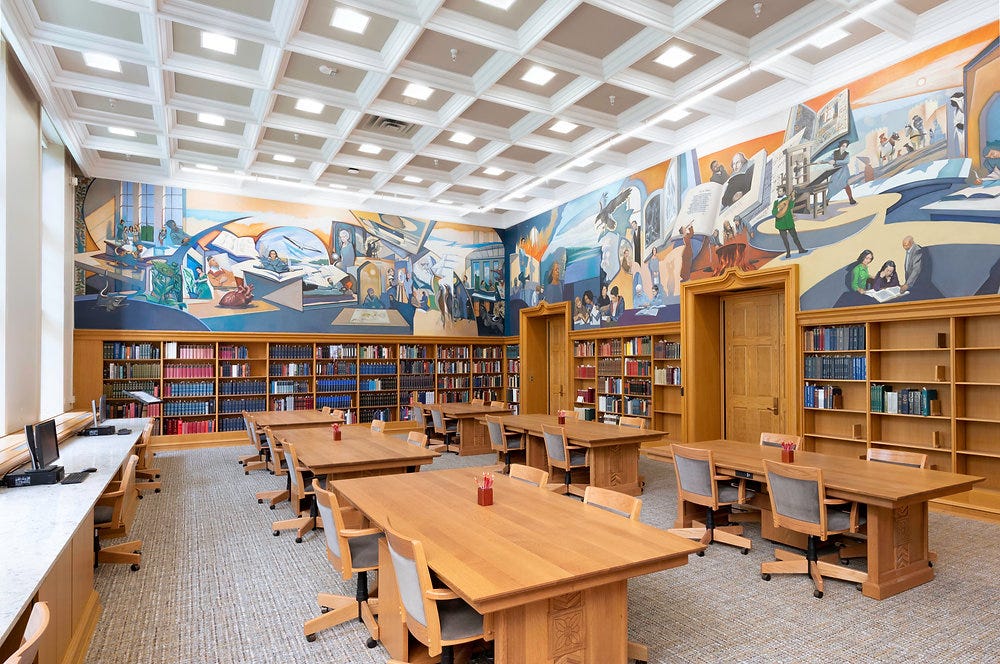
The archives are intimidating, especially for students in their first year of college. Most students would not think of visiting if they weren’t forced to. But once they do, they can read rare and unusual materials that are only available in spaces like that. And the rooms they do it in can be pretty cool:
Outcomes
So what are they supposed to produce in this class?
From the jump, I tried to emphasize that my goals were all about how they learned, rather than what. But in order to learn about learning, you do still need to learn something.
Throughout the semester, students were identifying more and more sources about their topic. They would regularly write short annotations about these sources. The idea was that by the end of the semester, they’d have notes on key ideas from over twenty different sources of information.
Really, that was enough of an outcome for me. But I also understand that students want to do something to demonstrate all the time they’ve taken on their projects. So the final class session had students do a ten-minute presentation to a group of three other students.
These presentations were done in small groups because there was no time to have everyone in the course give a presentation that long. At the mid-point of the semester, I had them give short “update briefings” on their inquiry, but those were only two minutes long. In order to give them space to present in a more nuanced way, I had to do it in small groups.
Their final paper, then, wasn’t really about their topic. That had been covered in the presentations. The paper was a short, reflective paper on the process they took in their inquiry. I wanted to have them think about how they’d learned and what they hoped to apply from the class moving forward. This class is not an end in itself, after all. It should serve their development as students more generally.
This focus on process and joy also serves as way of making the course more AI-resilient. Students are incentivized to do their own work because they are writing largely about their own experience. And they are incentivized to actually learn about their topics because they are in control of what they’re learning about. You’re less likely to outsource mental labor if you’re personally invested in your outcomes.
The class has lots of room for improvement, and I’m looking forward to teaching it again. But however much I change about it, I hope to keep process and joy at its core instead of conceptualism.
-Matt
Lucky kids!
Hope the department heads felt it was positive too.